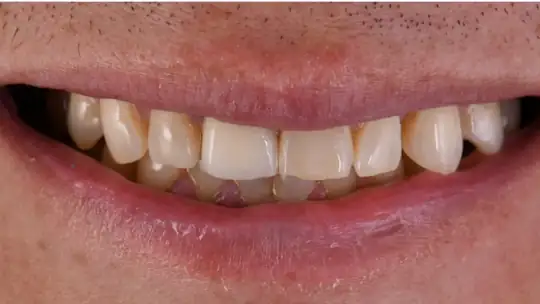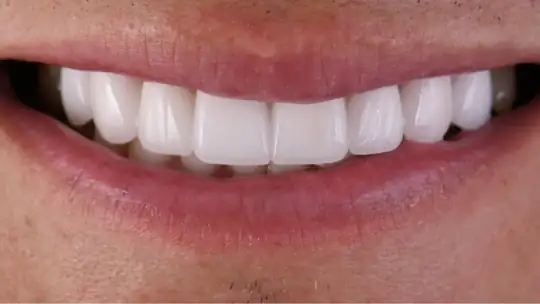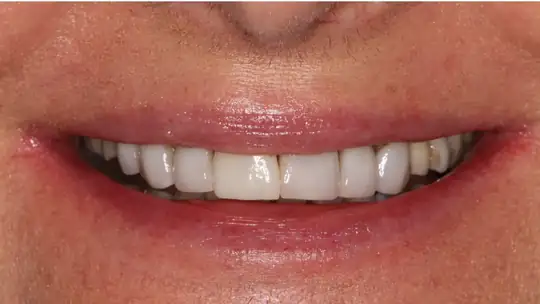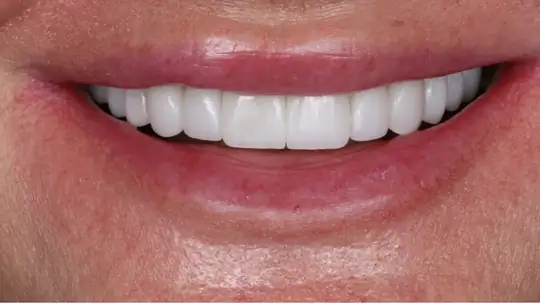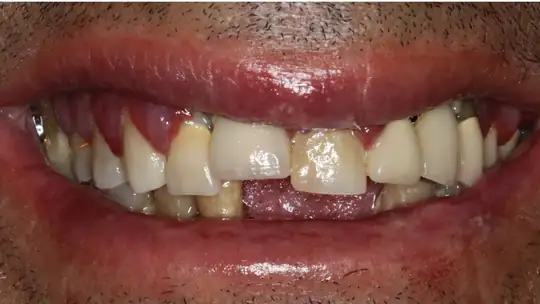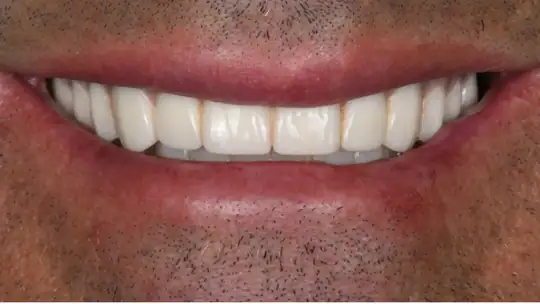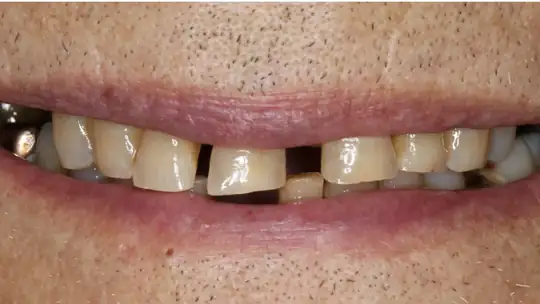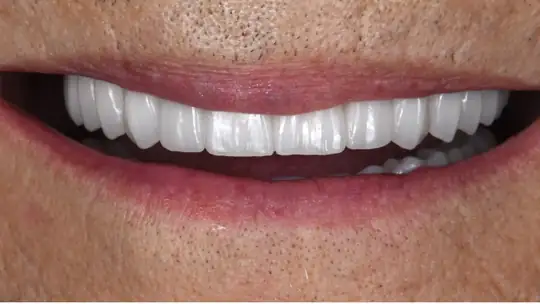

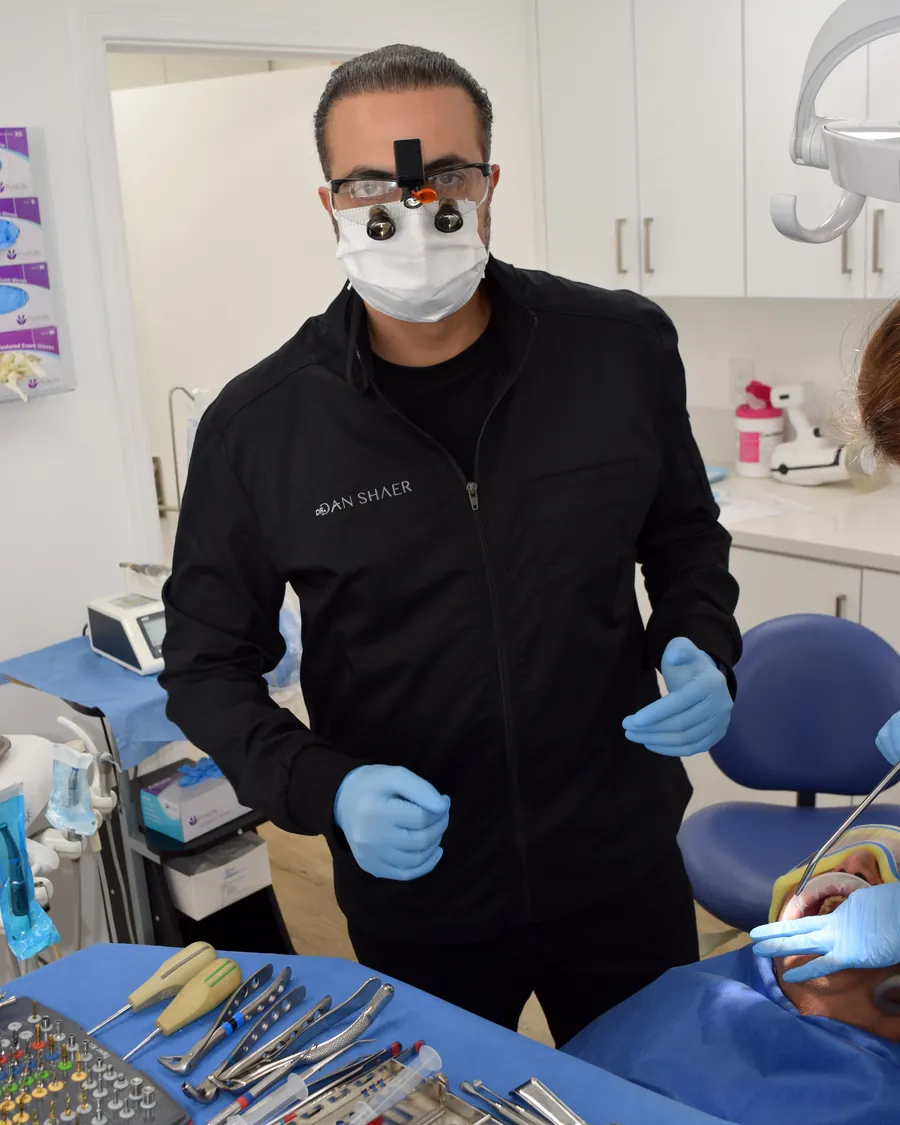
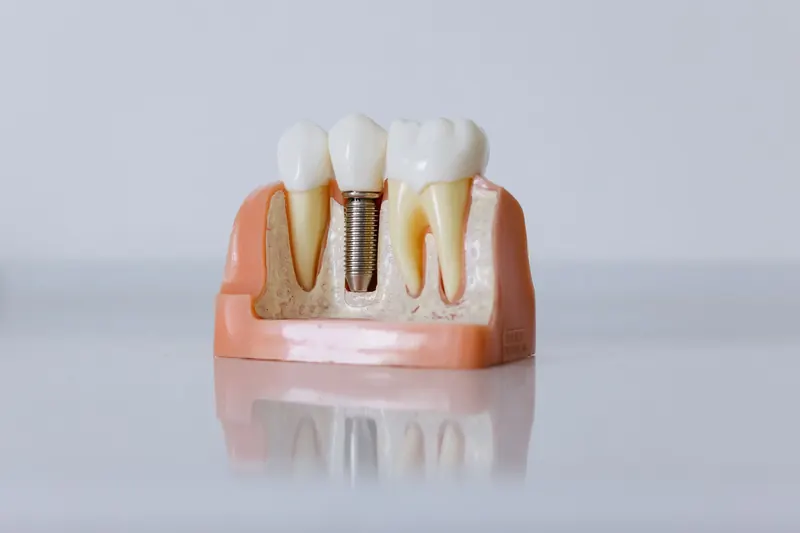
Dental implants are the closest thing to a natural tooth that dentistry can offer. An implant replaces the root of a missing tooth, fuses with the jawbone, and supports a crown that looks, feels and functions like your own tooth. Unlike a removable denture, it does not move, and unlike a traditional bridge, it does not require grinding down the healthy teeth next to the gap.
Dr. Dan Shaer, who completed an Implantology Fellowship, plans implants through 3D digital guides for accuracy, and designs each implant crown as part of your smile. The goal is a replacement tooth that nobody can pick out.
What is a dental implant?
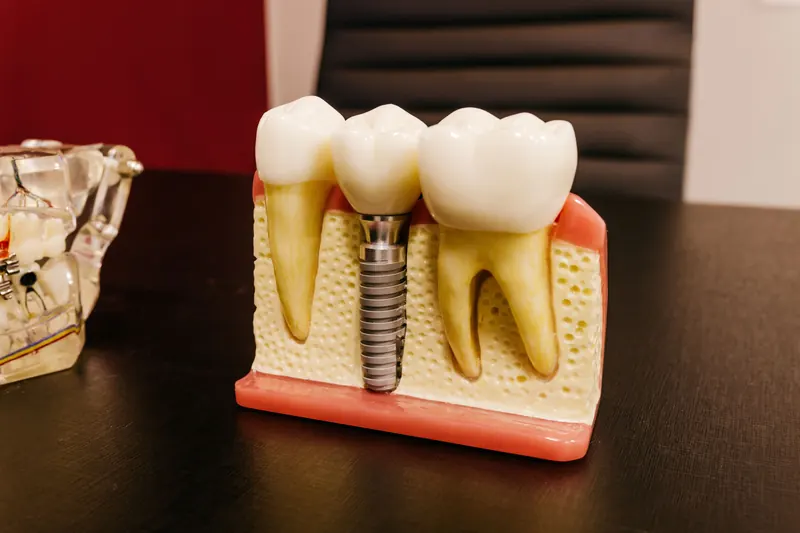
A dental implant restoration has three parts, according to Cleveland Clinic:
- The implant: a small threaded post, usually titanium, placed in the jawbone where the tooth root used to be
- The abutment: a connector that attaches to the implant and rises just above the gum
- The restoration: the visible crown, bridge or denture attached to the abutment
Over the following months the bone grows around the implant and bonds to it. This process is called osseointegration, and it is what makes an implant stable enough to chew like a natural tooth. The American Association of Oral and Maxillofacial Surgeons notes that there is no shortcut around this healing and that it usually takes several months.
Implants planned through 3D digital guides
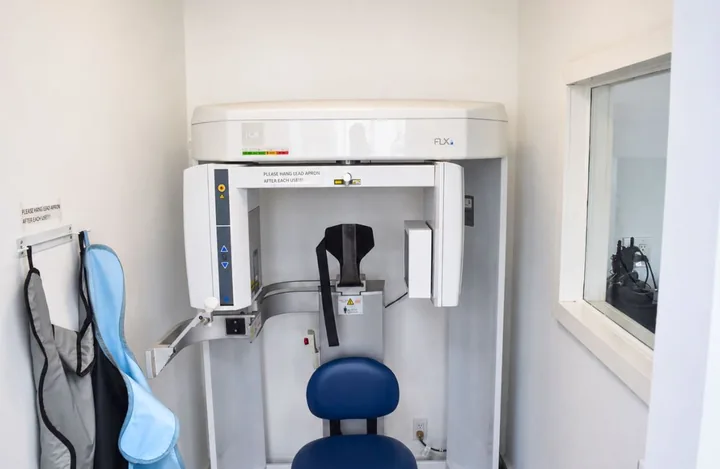
The success of an implant depends on where it is placed: the angle, the depth, and its position relative to the bone, nerves, sinuses and neighboring teeth. At the studio, implant placement is planned digitally in 3D before surgery, and a digital guide transfers that plan to the procedure for accuracy.
Planning also starts from the finished tooth. Because the crown is designed as part of your smile first, the implant can be positioned to support it properly, which helps the final tooth look natural at the gumline.
Who is a good candidate for dental implants?
You may be a good candidate if any of these sound familiar:
- Adults missing one or more teeth
- Patients who want a fixed tooth instead of a removable denture
- Anyone who wants to avoid reshaping healthy teeth for a bridge
- Healthy gums, or gum disease treated before surgery
- Enough jawbone to support an implant, or willingness to have a bone graft
- Non smokers, or patients willing to stop during healing
The only way to know for sure is an examination with digital scans. Dr. Dan tells you honestly whether this is the right option for you, and what the alternatives are.
Implants vs bridges vs dentures
| Dental implant | Tooth supported bridge | Removable denture | |
|---|---|---|---|
| Neighboring teeth | Left untouched | Usually reshaped to hold the bridge | Partials may clasp onto them |
| Stability | Fixed, fuses with the bone | Fixed | Removable, can move |
| Jawbone | Helps preserve it | Bone under the gap can shrink | Bone can shrink over time |
| Treatment time | Several months of healing | Usually a few weeks | Usually a few weeks |
| Feel | Closest to a natural tooth | Natural, cleaned differently | Least like natural teeth |
Cleveland Clinic notes that implants do not require removing enamel from neighboring teeth the way a bridge does.
Getting a dental implant, step by step
Every treatment at the studio follows the same mapped, guided process, from your first consultation to the final reveal.
- 01
Consultation and digital scanning
Dr. Dan listens to what you want to change, examines your teeth and gums, and takes digital scans, photos and video of your smile to confirm whether dental implants is the right choice for you.
- 02
Facial analysis and 3D mapping
Your face, lips and bite are measured so the plan is built around your proportions, not a template.
- 03
Your smile blueprint
The treatment is designed digitally. You review the blueprint and ask for changes before any treatment begins.
- 04
Mockup and preview
A mockup lets you preview the design before anything is final, so you know what you are agreeing to.
- 05
Treatment
The implant is placed following the 3D digital guide. After the bone has fused with it over the following months, the abutment and a crown designed to match your smile are attached.
- 06
Final reveal and after care
Your new tooth is checked for fit, bite and comfort, and you receive a care plan and a schedule of checkups to protect the implant for years to come.
Dental implant recovery and timeline
Cleveland Clinic describes the first round of healing as taking about one week, while the bone takes roughly three to nine months to fuse around the implant, depending on how quickly your body heals. Mild swelling and soreness for a few days are normal, and most people return to work quickly.
If the gap is visible when you smile, a temporary tooth can often be provided during healing. Once the implant has integrated, the abutment and final crown are attached. Some patients need a bone graft first if there is not enough bone to support an implant, which adds healing time.
How long do dental implants last?
With proper care, an implant can last a lifetime, according to both the AAOMS and Cleveland Clinic. The crown on top is subject to normal wear and may eventually need replacement; Cleveland Clinic notes that most crowns and bridges last around fifteen years, though this varies.
Care for an implant like a natural tooth: brush twice daily, clean around it every day, and keep regular checkups so the gums and bone around the implant stay healthy. Smoking and uncontrolled gum disease are the biggest threats to an implant's long term health.
How much do dental implants cost in Beverly Hills?
The cost of a single tooth implant starts at $2,349. That fee includes a free consultation ($150 value), a CBCT scan and x-rays, implant materials, sedation options, a 5-year clinical guarantee and post-op visits for one year. Your final cost depends on your case and the treatments you need:
- How many teeth are replaced, and whether with single crowns or a bridge
- Whether a bone graft or extraction is needed first
- The type of restoration on top of the implant
- Whether temporary teeth are needed during healing
Your exact fee is confirmed in a written plan after your consultation, before any treatment begins.
Payment options include cash, check or card, flexible spending accounts and select insurance coverage, plus third party financing through Cherry, Sunbit and CareCredit, which offer low monthly payment plans. For eligible patients there is a no interest option if fees are paid in full within a set number of months.
The most expensive dental work is often the work that has to be redone. Careful planning, quality materials and precise execution are what make a result last.
Why patients choose Dr. Dan Shaer for dental implants
Dr. Dan Shaer is a Beverly Hills trained cosmetic and restorative dentist who plans every case the way an architect plans a building: symmetry, proportion, alignment and balance are mapped first, and the treatment follows the blueprint. His philosophy is simple. Great dentistry should be natural, minimally invasive and tailored to the individual, so your smile matches your face, your personality and your identity.
- Digital Smile Design Certification, so every plan is previewed before treatment
- Implantology Fellowship and Biomimetic Dentistry Certification
- European Minimally Invasive Dentistry Program and U.S. and European training
- Beverly Hills Advanced Cosmetic Dentistry Training
- One plan for function and aesthetics, reviewed and approved by you before anything begins
See real results in the before and after gallery, or book a consultation at the studio on Wilshire Boulevard.